



Tephra deposits as chronostratigraphic markers in active tectonic basins (Val d’Agri, Southern Apennines, Italy)
Re G., M. Caciagli, S. Pucci, G. Di Vincenzo, P. Del Carlo (2026).
Science Direct, 784. https://doi.org/10.1016/j.quaint.2026.110466
Abstract
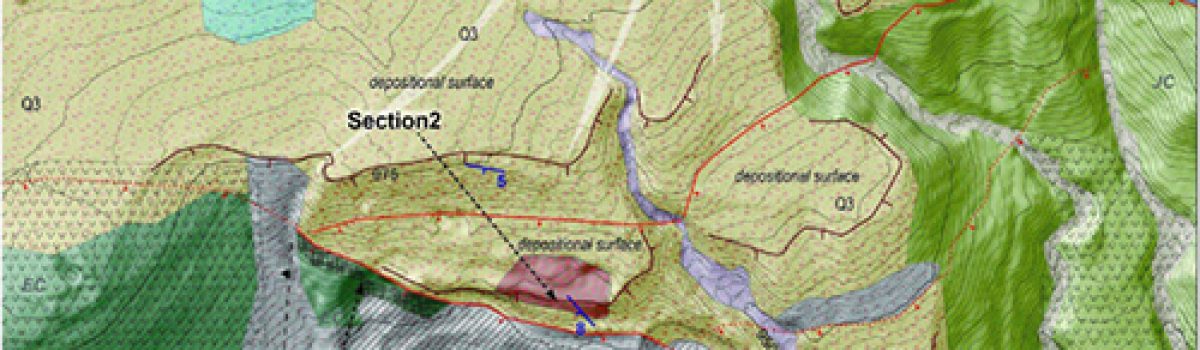
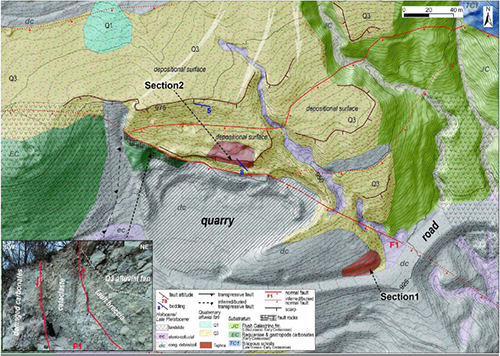
We investigate two sedimentary sections lying above an alluvial conglomerate fan (Q3) within the Val d’Agri valley, a Quaternary active tectonic depression located in the axial zone of the Southern Apennines fold-and-thrust belt. Section 1 consists of three superimposed pyroclastic units (VDA1, 2, and 3), each with peculiar stratigraphic and lithological features. Section 2 has intercalated an epiclastic layer enriched in volcaniclastic components (VDA6). Textural features of volcanic particles indicate that products from Section 1 are juvenile derived from primary fallout deposition from volcanic clouds, and litho-stratigraphic features suggest that they were supplied by at least two distinct eruptions. The topmost tephra (VDA1) yields an 40Ar/39Ar age of 102.4 ± 1.9 ka (±2σ). On the other hand, lithological features of VDA6 in Section 2, and textures of volcanic particles, suggest reworking and re-sedimentation processes of the original tephra. Major elements’ geochemical fingerprints allow correlation of the volcanic products with well-known eruptions from Campi Flegrei, namely Cancello (VDA1 and VDA2), Montemaoro/X-5 (VDA3) and Maddaloni/X-6 (VDA6), also recognized in several distal archives around the Mediterranean area. These tephra layers establish a high-resolution chronostratigraphic framework for the host succession. Specifically, the ∼109 ka Maddaloni tephra provides a minimum age constraint for the Q3 fan deposition, which is displaced by a system of SW-dipping normal faults. Based on the ∼25 m cumulative height of the tectonic scarp, we estimate a throw rate of 0.19-0.23 mm/y for one of the fault splays affecting the eastern flank of the Val d’Agri basin since the Late Pleistocene. These findings demonstrate that the SW-dipping fault system plays a role in the basin’s evolution, with deformation rates comparable to the major active faults of the Apennine axial belt.
Devi effettuare l'accesso per postare un commento.